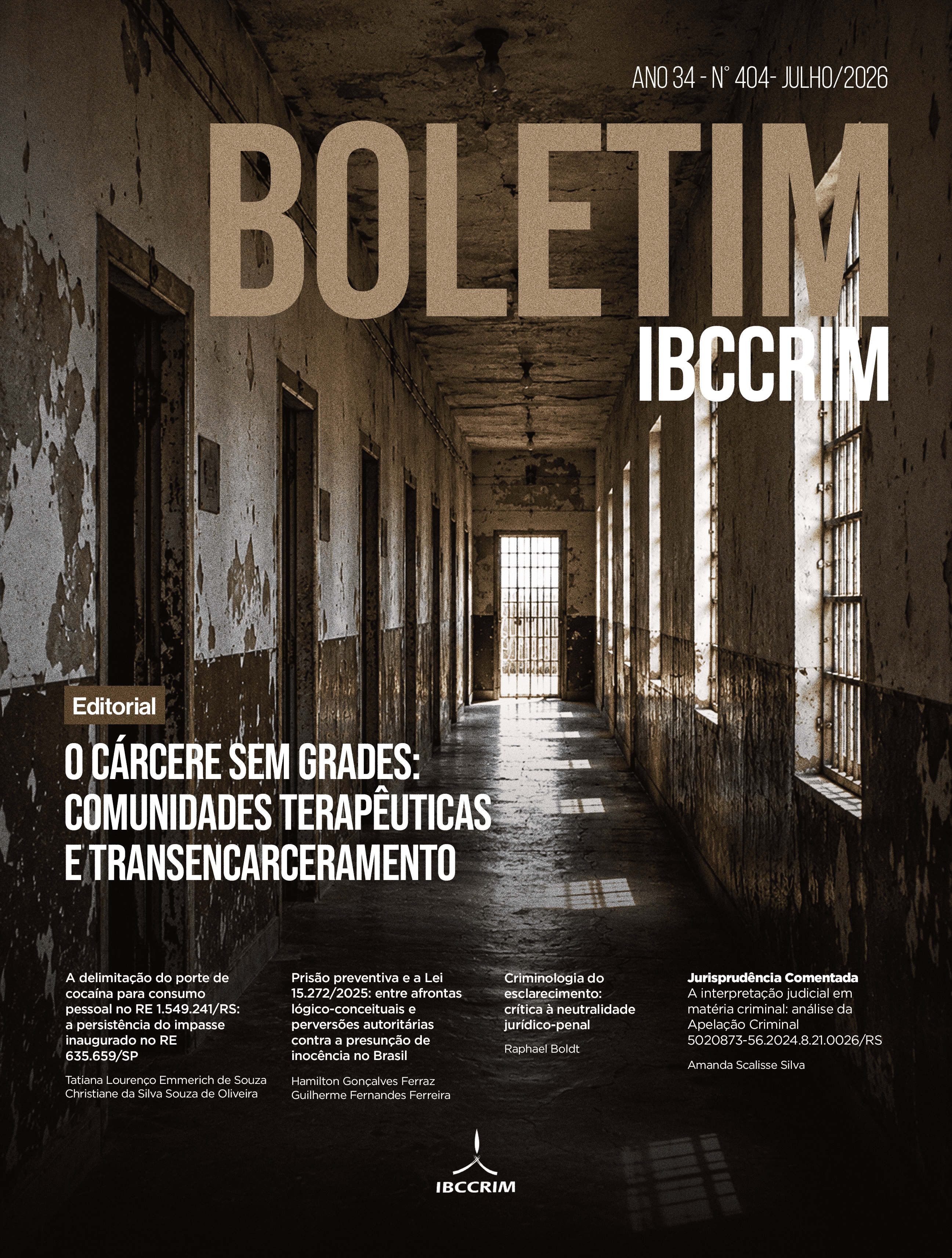
Judicial interpretation in criminal matters
an analysis of Criminal Appeal 5020873-56.2024.8.21.0026/RS
DOI:
https://doi.org/10.5281/zenodo.20819634Keywords:
psychological violence against women, emotional harm, material offense, criminal evidence, self-determinationAbstract
The judgment proceeds from a correct premise in recognizing the material nature of the offense set forth in Article 147-B of the Brazilian Penal Code, requiring proof of emotional harm as the statutory result and rejecting any automatic conviction based solely on the abstract seriousness of the alleged conduct. In the case at hand, the acquittal resulted from insufficient evidence and the absence of corroborative supporting elements. The aspect that calls for greater conceptual precision is the distinction between emotional harm and psychological illness: the result required by the offense does not presuppose a clinical pathology or expert evidence and may be established through other reliable means capable of demonstrating emotional impairment and the undermining of the victim’s self-determination.
Downloads
References
RIO GRANDE DO SUL. Tribunal de Justiça do Estado do Rio Grande do Sul. Primeira Câmara Especial Criminal. Apelação Criminal n. 5020873-56.2024.8.21.0026/RS. Relator: Luciano André Losekann. Julgado em 12 fev. 2026.
Downloads
Published
How to Cite
Issue
Section
License
Copyright (c) 2026 Me. Vitor Bellotto

This work is licensed under a Creative Commons Attribution-NonCommercial 4.0 International License.
Copyright of published articles belongs to the author, but with journal rights over the first publication and respecting the one-year exclusivity period. Authors may only use the same results in other publications by clearly indicating this journal as the medium of the original publication. If there is no such indication, it will be considered a situation of self-plagiarism.
Therefore, the reproduction, total or partial, of the articles published here is subject to the express mention of the origin of its publication in this journal, citing the volume and number of this publication. For legal purposes, the source of the original publication must be consigned, in addition to the DOI link for cross-reference (if any).