The shy "pedagogical effect" of the declaration of the Unconstitutional State of Affairs in the prison system
the symbolic power of legal discourse
DOI:
https://doi.org/10.5281/zenodo.19699397Keywords:
pedagogical efect, symbolic power, unconstitutional state of affairs, penitentiary system, social movementsAbstract
Among the grounds for recognizing the Unconstitutional State of Affairs (ECI) in the prison system, the Brazilian Supreme Court Justices mentioned a "pedagogical role" of the judiciary, with some of the Ministers largely basing their position on this pedagogical/symbolic character. The article questions what this "pedagogical power" of a legal decision is about, and, more precisely, the decision that declared ECI in the Brazilian prison system. The question is connected to a broader research agenda related to the role and capacity of law to promote social transformations towards the emancipation of marginalized groups. Thus, in the first section, the issue is investigated theoretically, using the writings of Pierre Bourdieu as the main theoretical framework. In the second session, the pedagogical nature of the decision is put to the test: in a qualitative empirical study of the decisions of the São Paulo State Court of Justice in Criminal Habeas Corpus, it was verified how the declaration of the ECI in the prison system is being mobilized by the magistrates. No evidence was found that the declaration of the ECI had any relevant effect on the magistrates' perception of the prison system.
Downloads
References
ALBISTON, Catherine. The dark side of litigation as a social movement strategy. Iowa Law Review Bulletin, v. 96, p. 61-77, 2010. Disponível em: https://ssrn.com/abstract=1708268. Acesso em: 22 abr. 2026.
AZEVEDO, Rodrigo Ghiringhelli. A força do direito e a violência das formas jurídicas. Revista de Sociologia Política, Curitiba, v. 19, n. 40, p. 27-41, out. 2011. https://doi.org/10.1590/S0104-44782011000300004
BORGES, Juliana. O que é: encarceramento em massa? Belo Horizonte: Letramento, 2018.
BOURDIEU, Pierre. A distinção: crítica social do julgamento. Tradução: Daniela Kern; Guilherme J. F. Teixeira. São Paulo; Porto Alegre: Edusp; Zouk, 2007.
BOURDIEU, Pierre. O poder simbólico. Tradução: Fernando Tomaz. Rio de Janeiro: Bertrand, 1989.
BOURDIEU, Pierre. Sobre o Estado: cursos no Collège de France (1989-92). Tradução: Rosa Freire D’Aguiar. São Paulo: Companhia das Letras, 2014.
BRASIL. Supremo Tribunal Federal (Plenário). Arguição de Descumprimento de Preceito Fundamental 347/Distrito Federal. Relator: Ministro Marco Aurélio. Redator do Acórdão: Ministro Luís Roberto Barroso. Julgamento: 4 out. 2023. Disponível em: https://portal.stf.jus.br/processos/detalhe.asp?incidente=4783560. Acesso em: 6 jun. 2024.
BRASIL. Supremo Tribunal Federal (Plenário). Medida Cautelar na Arguição de Descumprimento de Preceito Fundamental 347/Distrito Federal. Relator: Ministro Marco Aurélio. Julgamento: 9 set. 2015. Disponível em: https://portal.stf.jus.br/processos/detalhe.asp?incidente=4783560. Acesso em: 6 jun. 2024.
CASTRO, Felipe Araújo. A força do Direito: roteiros de pesquisa em sociologia do campo jurídico. Revista Brasileira de Estudos Políticos, Belo Horizonte, n. 120, p. 159-201, jan/jun. 2020. Disponível em: https://pos.direito.ufmg.br/rbep/index.php/rbep/article/view/669. Acesso em: 22 abr. 2026.
CASTRO, Felipe Araújo; CAVALCANTE, Karízia Gabriela. As repercussões do reconhecimento do Estado de Coisa Inconstitucional (ADPF n.º 347) no tratamento orçamentário da execução penal pelo Tribunal de Justiça do Rio Grande do Norte. Revista Brasileira de Sociologia do Direito, v. 10, n. 3, p. 142-167, set./dez. 2023. https://doi.org/10.21910/rbsd.v10i3.745
FERRAZ JUNIOR, Tércio Sampaio. Teoria da norma jurídica: ensaio de pragmática da comunicação normativa. Rio de Janeiro: Forense, 2006.
FLAUZINA, Ana; PIRES, Thula. Supremo Tribunal Federal e a naturalização da barbárie. Revista Direito e Práxis, Rio de Janeiro, v. 11, p. 1211-1237, 2020. https://doi.org/10.1590/2179-8966/2020/50270
FOUCAULT, Michel. A ordem do discurso. São Paulo: Edições Loyola, 1996.
GOMES, Romeu. Análise e interpretação de dados de pesquisa qualitativa. In: DESLANTES, Suely Ferreira (org.). Pesquisa social: teoria, método e criatividade. 28. ed. Petrópolis: Vozes, 2009.
LAGO, Laone. Estado de coisas inconstitucional ambiental brasileiro. São Paulo: Dialética, 2023.
MACHADO, Maíra Rocha; VASCONCELOS, Nathália Pires de. Uma conjuntura crítica perdida: a COVID-19 nas prisões brasileiras. Revista Direito e Práxis, v. 12, n. 3, p. 2015-2043, 2021. https://doi.org/10.1590/2179-8966/2021/61283
MACHADO, Maíra Rocha; VASCONCELOS, Nathália Pires de; WANG, Daniel Wei Liang. COVID-19 nas prisões: um estudo das decisões em habeas corpus do Tribunal de Justiça de São Paulo. Revista de Administração Pública, Rio de Janeiro, v. 54, n. 5, p. 1472-1485, set-out. 2020. Disponível em: https://periodicos.fgv.br/rap/article/view/82222. Acesso em: 22 abr. 2026.
MCADAM, Doug. Chapter 3: The Political Process Model. In: Political process and the development of black insurgency, 1930-1970. Chicago: University of Chicago Press, 1999.
MIGUEL, Luis Felipe. Bourdieu e o “pessimismo da razão”. Tempo Social, São Paulo, v. 27, n. 1, p. 197-216, 2015. https://doi.org/10.1590/0103-207020150111
PASTANA, Débora. Justiça penal autoritária e consolidação do Estado punitivo no Brasil. Revista de Sociologia e Política, Curitiba, v. 17, n. 32, p. 121-138, 2009. https://doi.org/10.1590/S0104-44782009000100008
PINTO, Louis. Pierre Bourdieu e a teoria do mundo social. Tradução de Luiz Alberto Monjardim. Rio de Janeiro: Editora da FGV, 2000.
PIRES, Álvaro. A racionalidade penal moderna, o público e os direitos humanos. Novos Estudos CEBRAP, n. 68, p. 39-60, 2004.
SÃO PAULO (Estado). Tribunal de Justiça do Estado de São Paulo. TJSP concentra 26% dos processos do Brasil, de acordo com relatório “Justiça em Números”. São Paulo: TJSP, 2015. Disponível em: https://www.tjsp.jus.br/Noticias/Noticia?codigoNoticia=28002&pagina=1343. Acesso em: 23 maio 2024.
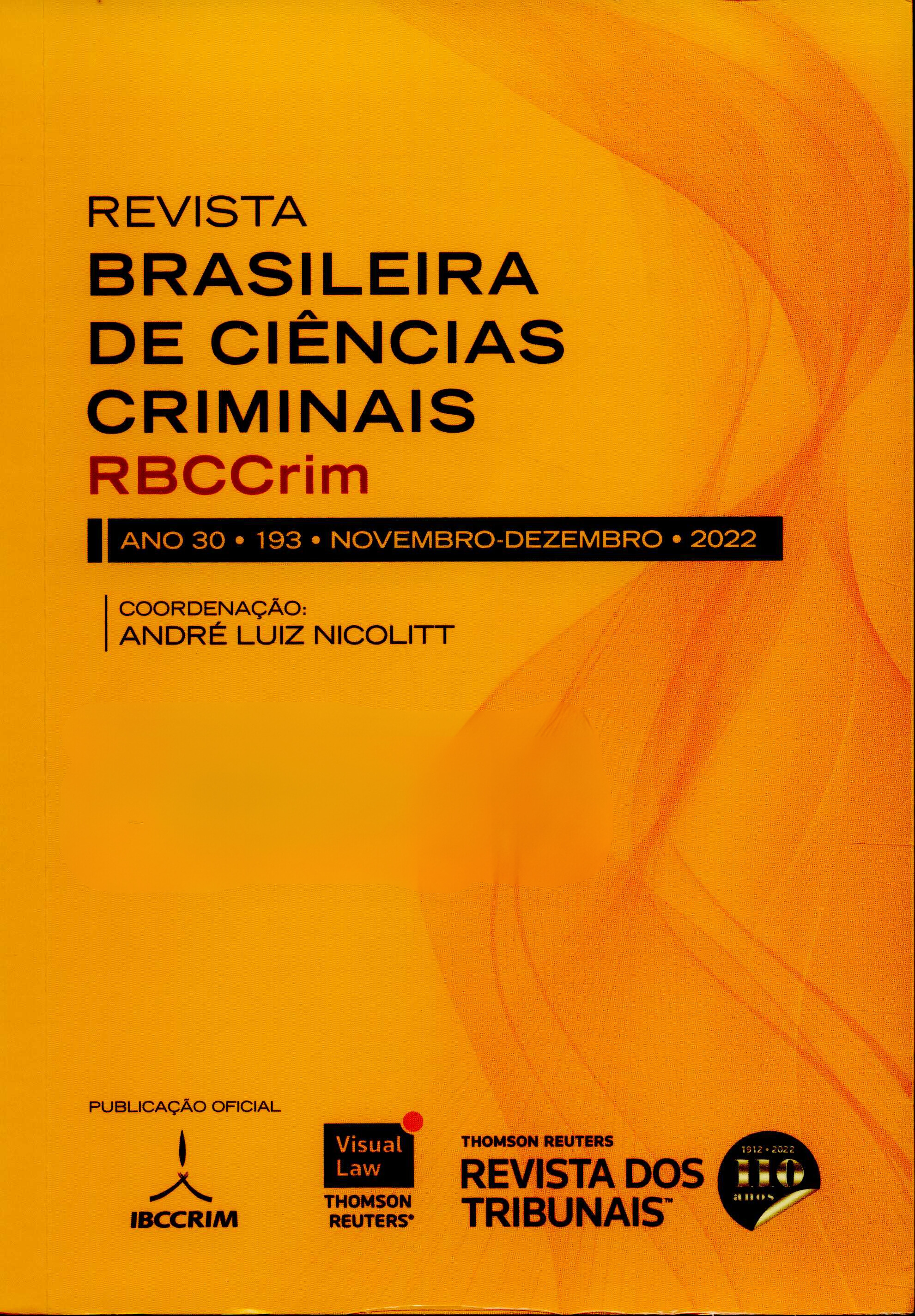
Downloads
Published
How to Cite
Issue
Section
License
Os direitos autorais dos artigos publicados são do autor, com direitos do periódico sobre a primeira publicação.
Os autores somente poderão utilizar os mesmos resultados em outras publicações indicando claramente este periódico como o meio da publicação original. Se não houver tal indicação, considerar-se-á situação de autoplágio.
Portanto, a reprodução, total ou parcial, dos artigos aqui publicados fica sujeita à expressa menção da procedência de sua publicação neste periódico, citando-se o volume e o número dessa publicação. Para efeitos legais, deve ser consignada a fonte de publicação original.