The military justice in the State of Pernambuco after the military regime
an authoritarian legacy
Keywords:
Democracy, Military Justice, AuthoritarianismAbstract
This article is based on research conducted in the archives of the Military Auditorship of the State of Pernambuco. The research shows the violation of the basic principle of equality before the law due to the existence of two court systems - civil and military - with different procedures and sentences for similar crimes committed by the civil and military police. The article demonstrates how the authoritarian regime broadened the scope of military jurisdiction, a situation that has changed little fifteen years later. Military Justice continues to function in a hybrid manner. It belongs to the Judiciary, but the majority of its judges are military. Thus, the Military Police is able to influence the outcome of certain judgments without having to assume the burden of the decision, since the final responsibility belongs to the civil Judiciary. Finally, the article emphasizes the incompatibility between the continuity of this type of military justice and a democracy seeking to consolidate itself.
Downloads
References
ALVES, Luiz Cláudio. Manual de legislação penal militar. Rio de Janeiro: Destaque, 1994.
ARQUIDIOCESE DE SÃO PAULO. Brasil: nunca mais. Rio de Janeiro: Vozes, 1985.
ASSIS, Jorge César de. Justiça Militar Estadual. Curitiba: Juruá, 1992.
BICUDO, Hélio. A violência policial e a Justiça. Folha de S. Paulo, 18 maio 1993.
BICUDO, Hélio. Crimes militares e crimes de militares. Folha de S. Paulo, 08 abr. 1993.
BICUDO, Hélio. Fim à impunidade. Folha de S. Paulo, 04 set. 1993.
BICUDO, Hélio. Justiça Militar e corporativismo. Folha de S. Paulo, 23 maio 1995.
BICUDO, Hélio. Justiça Militar e impunidade. Folha de S. Paulo, 03 mar. 1995.
BICUDO, Hélio. Problema ainda não resolvido. Folha de S. Paulo, 13 ago. 1996.
CARVALHO, Joaquim de. O diário de um contra. Veja, 16 dez. 1992.
CINTRA JÚNIOR, Dyrceu Aguiar Dias. Judiciário e reforma. O Estado de S. Paulo, 12 nov. 1994.
CORRÊA, Getúlio. A Justiça Militar no banco dos réus. Folha de S. Paulo, 02 abr. 1995.
DAHL, Robert A. Democracy and its critics. New Haven: Yale University Press, 1989.
HIGINO, Elias. Justiça Militar precisa de juízes. Diário de Pernambuco, 13 set. 1992.
INTERNATIONAL COMMISSION OF JURISTS. Chile: a time of reckoning: human rights and the judiciary. Geneva: Center for the Independence of Judges and Lawyers, 1992.
MACHADO, Marcello Lavenere; MARQUES, João Benedito de Azevedo. História de um massacre na Casa de Detenção de São Paulo. São Paulo: Cortez, 1993.
NEVES, Antonio Augusto. Por favor mudem o disco. Folha de S. Paulo, 01 maio 1995.
PEREIRA, Anthony. The shackled monster: state violence and legal present. Manuscrito, 1995.
PINOTTI, Antonio Jurandir. Criminosos comuns versus policiais criminosos. Folha de S. Paulo, 02 jul. 1995.
ROETHER, Larry. Guatemala's uneasy time: no war but no peace pact. New York Times, 18 ago. 1996.
ROMANO, Roberto. Juízes, democracia, imprensa. Folha de S. Paulo, 18 maio 1995.
SANTO, José do Espírito. O direito penal militar aplicável aos policiais e bombeiros militares. Minas Gerais: Polícia Militar de Minas Gerais, 1989.
SCHNEIDER, Ben Ross. Democratic consolidations: some broad comparisons and sweeping arguments. Latin American Research Review, v. 30, n. 2, p. 220-221, 1995.
SHERMAN, Edward S. The civilianization of military law. Maine Law Review, v. 22, 1970.
STEPAN, Alfred. Rethinking military politics: Brazil and the Southern Cone. Princeton: Princeton University, 1988.
TILLY, Charles. From mobilization to revolution. Massachusetts: Addison-Wesley, 1978.
ULHÔA, Raquel. Aperfeiçoamos o projeto, diz Elcio. Folha de S. Paulo, 16 maio 1996.
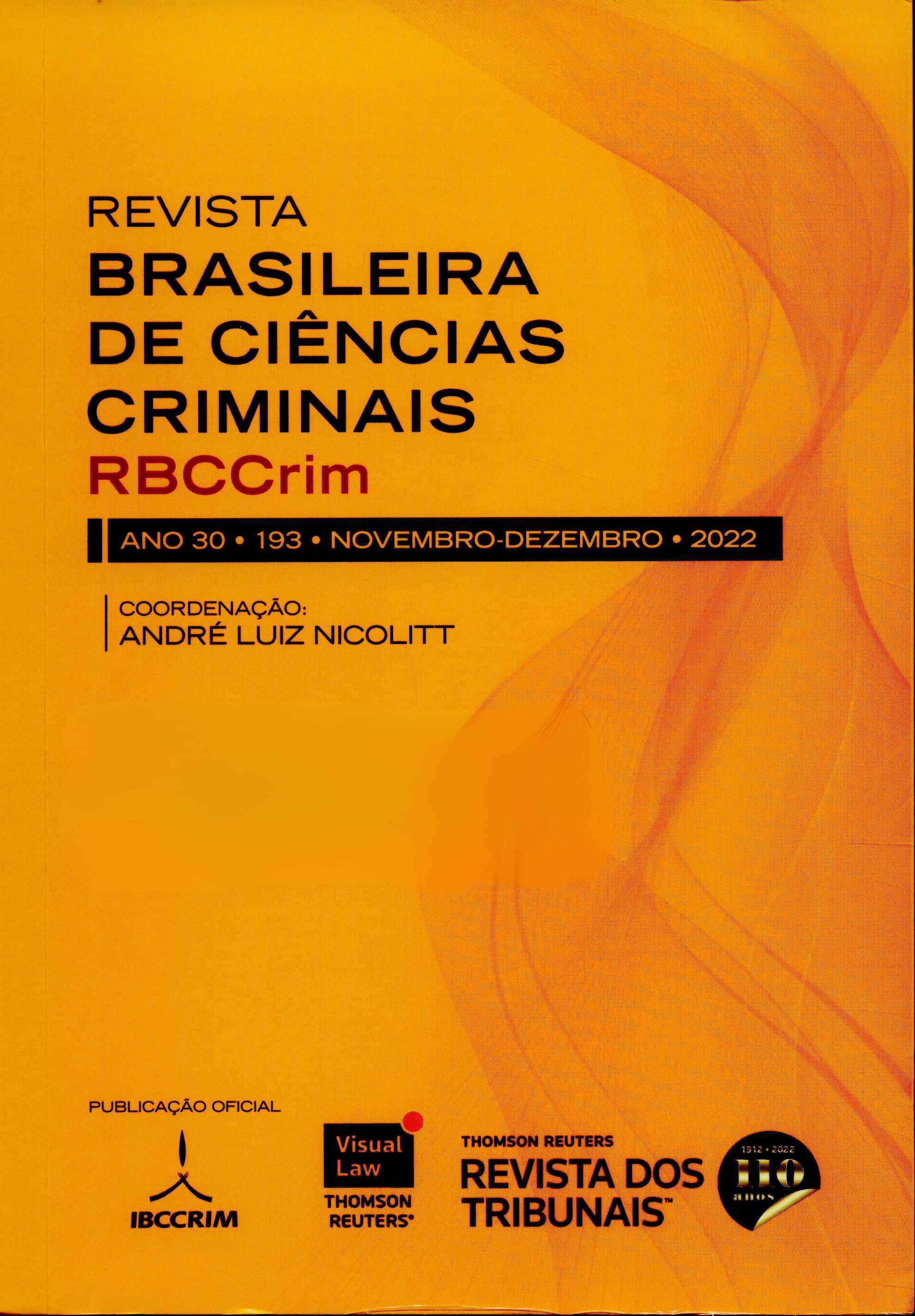
Downloads
Published
How to Cite
Issue
Section
License
Os direitos autorais dos artigos publicados são do autor, com direitos do periódico sobre a primeira publicação.
Os autores somente poderão utilizar os mesmos resultados em outras publicações indicando claramente este periódico como o meio da publicação original. Se não houver tal indicação, considerar-se-á situação de autoplágio.
Portanto, a reprodução, total ou parcial, dos artigos aqui publicados fica sujeita à expressa menção da procedência de sua publicação neste periódico, citando-se o volume e o número dessa publicação. Para efeitos legais, deve ser consignada a fonte de publicação original.